
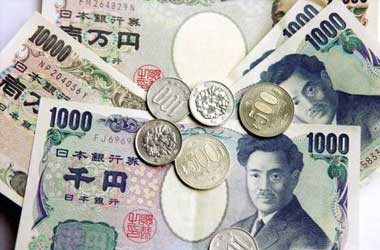
 The Japanese Yen recently declined against the U.S. Dollar following the Bank of Japan’s (BoJ) decision not to signal any impending interest rate hikes in the near future. Despite this, the Yen has found some strength against other currencies like the British Pound, driven by a broader decline in market sentiment.
The exchange rate between the Dollar and the Yen increased after the BoJ announced it would keep short-term interest rates unchanged, maintaining the current range between zero and 0.1%. Additionally, the central bank revealed plans to continue purchasing approximately JPY 6 trillion worth of Japanese government bonds monthly. However, it also indicated that a strategy for gradually reducing these purchases would be presented in July, aiming to decrease its balance sheet over time.
Market analysts observed that the BoJ’s cautious approach towards tapering bond purchases has left traders uncertain about the central bank’s commitment to further rate cuts within the year. The maintenance of current interest rates was largely anticipated, with market participants more focused on the bank’s future communication regarding the potential adjustments to its longstanding quantitative easing (QE) program designed to keep borrowing costs low.
In preparation for the July policy meeting, the BoJ plans to gather feedback from market participants on possible methods to scale back its Japanese government bond (JGB) purchases. Analysts from Commonwealth Bank noted that by reducing the rate of JGB purchases, the BoJ’s balance sheet would gradually shrink, aligning it with other central banks that are engaging in Quantitative Tightening (QT).
Yen’s Struggles in the G10 Currency Space
For over a year, the Yen has been the weakest performer among the G10 currencies. This trend has been driven by other central banks raising interest rates and implementing QT measures to combat inflation. These actions have led to higher bond yields, attracting Japanese investors who can still borrow at near-zero interest rates, resulting in the Yen being sold to fund foreign investments.
Despite the Yen’s ongoing weakness, Japanese policymakers are concerned about its declining value. Any decision to adjust interest rates will consider the Yen’s depreciation. While the BoJ has intervened in currency markets in the past, it has only done so in cases of extreme volatility. With recent movements being relatively stable, the likelihood of immediate intervention remains low, allowing for a continued gradual depreciation.
External Factors Supporting the Yen
Interestingly, the Yen has gained some support from a general decline in global investor sentiment. This sentiment shift is partly due to growing concerns about the French economy and its debt markets. The unexpected announcement by President Emmanuel Macron of a snap legislative election at the end of the month has contributed to political uncertainty. This election call appears to be backfiring, as both left and right factions have a chance of winning a majority, potentially marginalizing Macron’s centrist party.
Should this political crisis in France continue, the Yen could maintain its support against European currencies, the Pound, and commodity currencies. The current environment suggests that while the Yen faces challenges due to domestic monetary policy and international economic dynamics, it may still find periods of relative strength driven by external geopolitical and economic developments.