
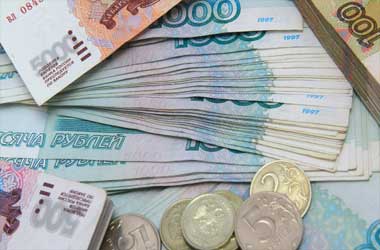
 The Russian ruble continued to trade near 6-month low hit last week as crude oil prices remained weak on worries over recovery in fuel demand and an increase in the US crude oil stock piles. The most watched Brent crude declined over 1% to less than $42 per barrel.
Furthermore, Russian President Vladimir Putin stated that Moscow was worried by political uncertainty in Kyrgyzstan and expected stability to return quickly. In the meanwhile, investors wait for the Treasury bond auctions conducted by the finance ministry. In general, demand for OFZ bonds reflects investors’ view about Russian assets.
The currency remains under pressure due to political risks associated with issue in Belarus, alleged poisoning of Alexei Navalny, battle in South Caucasus region and increasing cases of Covid-19 infection.
Several main indicators of economic activity continue to present a gloomy picture. The IHS Markit reported that the country’s Services PMI fell to 53.70 in September, from 58.20 in the earlier month, reflecting a slowdown in business activity. Despite remaining robust, fresh orders growth rate hit a three month low, while overseas orders decreased for the seventh consecutive month.
Mirroring the weakness, firms slashed their employee count against the backdrop of weak capacity utilization. With regards to price, input cost inflation remained unaltered as increase in utility and supplier costs was offset by negative impact of exchange rate.
On the contrary, output costs rose in a solid manner and at the quickest rate since March. Ultimately, business sentiment declined to a three month low against the backdrop of worries about the permanence of economic rebound.
Data published by the IHS Markit indicated that manufacturing PMI fell to 48.90 in September, from 51.10 in August. The resumption of contraction was robust as a whole and the quickest since June. In the meanwhile, output increased at the second fastest rate since April 2019 as firms’ restarted business following the relaxation of prohibition.
During the same period, employment declined further against the backdrop of a decrease in fresh order inflows. With regards to price, the pace of output cost inflation remained robust as a whole and the quickest in four months.
Input costs inflation declined mildly. Sentiment eased to the lowest level in four months and below the long-term average of the series, nevertheless, as subdued fresh order inflows affected the sentiment.
However, not all data was bad. The annual inflation rate increased to 3.7% in August, from 3.6% in July and in line with economists’ forecasts, though staying marginally lower than the central bank’s target of 4%.
The reported inflation was the highest since October 2019, led by 4.4% increase in price of food products and 3.8% rise in non-food products. However, services inflation eased to 2.5%, from 2.7%. On m-o-m basis, consumer prices declined 0.1%, after rising 0.4% in July and compared to expectations for an unchanged reading.